The Vagus Nerve
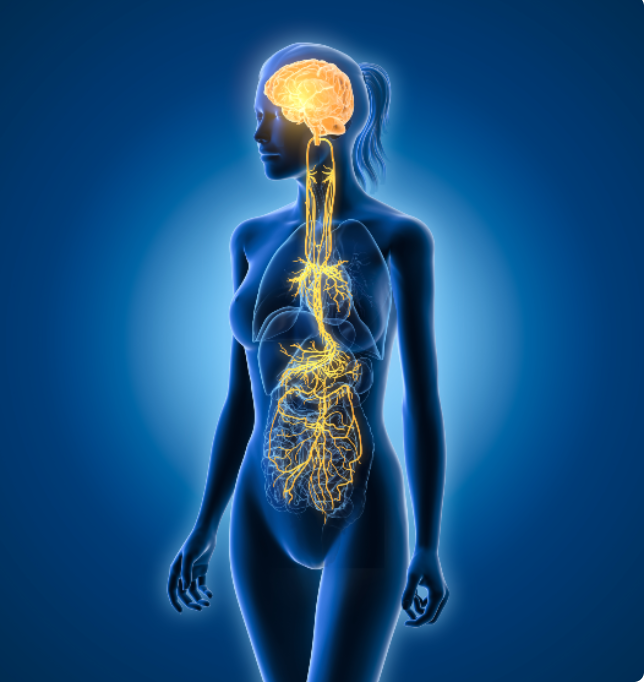
Hi everyone! If you got here from the QR Code at Mardi Gras, here are some additional resources where you can learn about the vagus nerve, why it’s important and what are some ways to work with it to help regulate your nervous system. Understanding how our autonomic nervous system operates, and practicing growing our window of tolerance for this time we’re living in is a beautiful and necessary thing we need to do for ourselves and for each other. To be action-oriented, we have to first have a regulated nervous system. The vagus nerve and its role in regulation is just one part of that, but an important part!
What is the vagus nerve?
The vagus nerve, also called “the wandering nerve,” (it’s actually a pair of cranial nerves) are the longest nerves in the body, that go from our brain stem to our colon.
This video below gives extensive information about the vagus nerve, and breaks down some of the influencer hype on social media. It’s important to know that a handful of quick hacks are never going to resolve something as complex as the unconscious processes of our bodies that evolved to help us survive, but I will say I have worked with some of the recommendations I see out there (I shared more information about those later in this post) and have had a lot of success utilizing them as resources as I’ve learned the nuanced rhythms of my own nervous system.
What is the Autonomic Nervous System and What Does It Have To Do With the Vagus Nerve and My Regulation?
The first video below is a great, quick introduction to the autonomic nervous system: the parasympathetic nervous system (PNS “rest and digest”) and the sympathetic nervous system (SNS “fight or flight”). Our autonomic nervous system is the part of our nervous system that operating what is behind the scenes that we are not consciously controlling and happen automatically – think temperature regulation, breathing, digestion, heart rate. The autonomic nervous regulates these involuntary processes and helps us to keep a healthy balance between excited and relaxed (in Polyvagal Theory, they call this state “Ventral Vagal”), in a state of homeostasis.
The vagus nerve makes up 75% of the PNS. Our PNS helps our body to calm down after stress by slowing down our heart rate, supporting digestion. The PNS also encourages rest and recovery by helping our muscles relax and lowering our blood pressure. If you have an interest in going deeper, this next video will bring you into the inner workings of the PNS.
Similarly, the other main branch of our autonomic nervous system is the sympathetic nervous system (SNS). It’s responsible for the body’s “fight-or-flight” response. It is the crucial partner to the PNS, and helps us to manage stress and prepare for action when our nervous systems detect potential dangerous or challenging situations.
Vagus Nerve Activation
It’s important to have a balance of “good stress” and relaxation. In the time we’re living in though, we’re overloaded constantly, and many of are walking around in states of overwhelm, activated, agitated and operating from a stress response. Building out your resources for how you can help yourself get back into balance from that state is a worthy work.
Related to the vagus nerve, here is a list of some of my favorites that activate the vagus nerve, and practices I do daily to help bring myself back to a regulated state. A reminder that these practices don’t resolve anxiety or depression, and aren’t meant to resolve an emergency, but rather are some practices to reach for when you need to relax and calm down.
- Deep breathing: Practice slow, diaphragmatic breathing, focusing on extending your exhales longer than your inhales.
- Cold exposure: Splash cold water on your face, place an ice pack on the back of your neck, or take a brief cold shower.
- Humming or singing: Make loud humming sounds or sing your favorite song to activate the vagus nerve through vocal cord vibrations. Sing it LOUD!
- Laughter: Watch a funny video, remember a funny memory, connect with a friend over a joke to stimulate the vagus nerve through belly laughter.
- Cold water face immersion (mammalian dive reflex): Submerge your forehead, eyes, and at least 2/3 of both cheeks in cold water for a quick vagus nerve boost. Make sure you read how to do this safely, and its not meant to be used in an emergency.
- Do some grounding, barefoot in the grass. Close your eyes if you feel safe and practice that deep breathing.
- Go for a slow walk. Pay attention to the nature around you. Look at
- Put your tongue to the roof of your mouth. This activates your vagus nerve and lets your body know you’re safe.
- Hug someone. Including self hugging! I do this one a lot. Hugging for at least 20 seconds releases the chemical oxytocin, which decreases cortisol, increases the PNS, and dampens the SNS.
- Shake it out! Shake your tail, shake your hands, shake your head. This never fails to interrupt a spiral for me.
- Breathe into my feet. I like to take deep breaths and exhale all the way down to my feet. It helps me cultivate somatic awareness through my body, and I always end up with some big yawns releasing any stuck energy.
For anyone of you who have made it to the end, I hope this was a helpful introduction to the incredible vague nerve(s) and how we can work with it to be more balanced, whole humans. I am certain that regulation holds the hand of being able to orient from a place of love and contribution.
One more add – Polyvagal Theory
The cards I gave out at Mardi Gras are from Deb Dana’s Polyvagal Card Deck. If you are interested in learning more about Polyvagal Theory, developed by Stephen Porges in the 1990s, below is a short informative video that takes you through the basics. The theory focuses on the autonomic nervous system (which remember, is made up of the PMS “rest and digest” and SNS “fight or flight”) and how it shapes our lived experience. The vagus nerve is a crucial part of understanding how our bodies regulate our physiological responses to our environment and the sense of safety and connection we are or are not able to feel at any given time.
I’ll note that there is criticism of Polyvagal Theory for not having robust enough science to back up parts of the theory, but it is recognized to be useful and is utilized successfully by clinicians.
Personally, I have benefitted significantly from using this theory with practitioners and therapists to better understand my experiences, and to work with the challenges I’ve had in cultivating a more regulated nervous system.
The Art of Losing

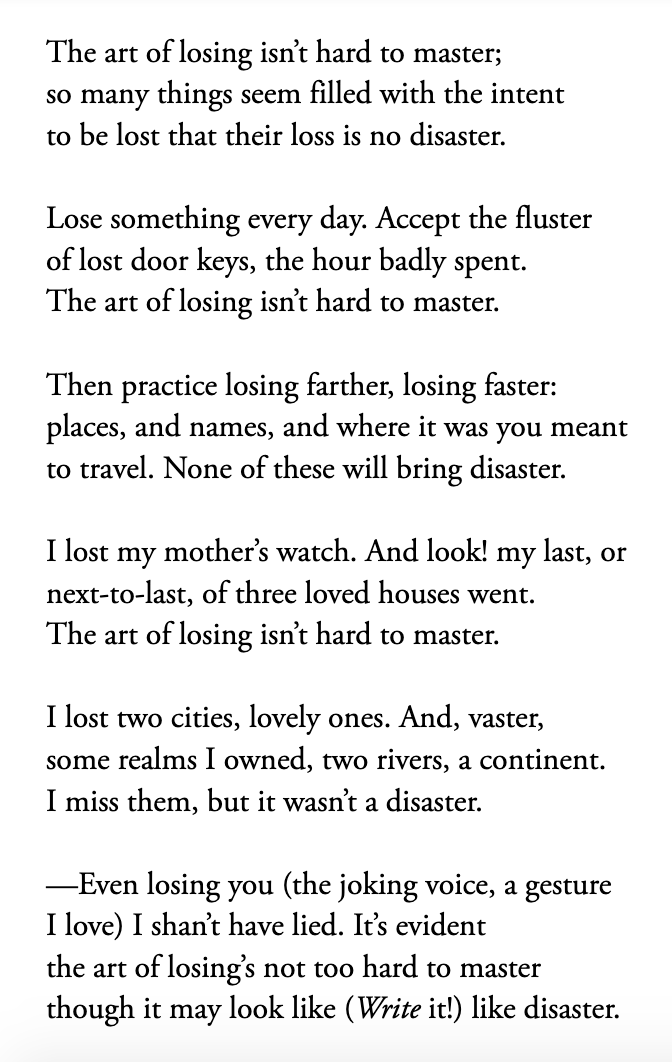
I’m thinking about Elizabeth Bishop’s poem, One Art, today.
I struggle with losing things. Or rather, I struggle to keep things. It has always been this way for me. No matter what system I choose to implement, though the misplacing is less, it still feels like a near constant. I have recurring dreams of losing things, too. Class schedules, keys, children, my partner, myself. The racing heart, the anger, the fear, it has happened again. You know, even in my dreams, I don’t accept myself for this, this tendency to forget, to misplace, to lose.
I’ve accepted, and am accepting, a lot about myself. It’s really, really hard sometimes, but I can accept myself still when I make mistakes, when I’m not kind, when I’m not the best friend, partner, sister, daughter, niece, cousin, community member, human. I can forgive myself for all of these things.
But losing another set of Air Pods? Unforgivable.
I’ve realized that what happens to me when I realize I’ve lost the ring my grandmother gave me follows a similar trajectory of the poem. Just a small thing, then another thing, then a bigger thing, and then, the biggest.
I lose my swim bag, my WOOP, and an hour or two roiled in anxiety that I don’t have enough time to get done what I need to get done.
Then I realize I lost my grandmother’s ring. (Why can’t I be different?)
Suddenly, I remember that there are several more things I haven’t done right. I forgot to pay that bill. I need to go pick up that package. My office is in disarray. I was mean to my partner. I forgot to do that thing at work. I’m not handling my finances well enough. I’ve ruined our whole day. I’m a total mess.
I hate myself.
Oh, my, goodness, how fast that slope slips. To the mighty root.
I’m so aware of this tendency, and even so,
even with all the tools I have in my tool belt, all the practice I have with breath, with somatic release, with speaking kindly to myself, with taking a break, taking a walk, taking a laugh.
Even still, sometimes I don’t stop that slide until I smack into that mighty bottom.
However, what growth looks like today, is though I recognize I’m here, I won’t stay at “I hate myself.” Though delayed, I do take that break. Though delayed, I do take that walk. I do apologize to my partner for taking my anger out on them. I do go outside and breathe. I do exercise (though not for a swim at the gym), and you know what? It turns out I have not even ruined the whole day.
I don’t hate myself. That’s a pattern, sliding down that slope. Pema Chödrön said, “Nothing ever goes away until it has taught us what we need to know.” Magically, the lost swim bag and WOOP and ring now can transform from a reason to punish myself for not being perfect to a friendly Sunday lesson, reminders that I’ve still got something to learn here about loving and forgiving myself, and now I can go practice doing it. I can be grateful for that.
I was going to write a story today, and instead I wrote this. I hope if you are out there, losing your hours or your keys or something farther, faster and vaster, that you can take a break, and remind yourself that
YOU
ARE
OKAY
JUST
AS
YOU
ARE.
The Most Dangerous Writing App, My Life as a House
The Most Dangerous Writing App was introduced to me in practice by a recent workshop I attended, which was an X-R-A-Y class, created by the Wildcats Write Together Group. You set a timer and you can’t stop writing for more than a few seconds, or it deletes everything you have written.
So, I’ve only used it a few times so far, and I think this is a super valuable tool for writers to get moving and potentially even find some fresh ideas. I also think this could be a great tool for anyone who needs to process something they’re working through and maybe needs to type into a void that will get deleted instead of immediately text-reacting to someone who has triggered you. Self-regulation and getting unstuck in my writing? A win!
In a practice of rejecting perfectionism, I’m posted the unedited 5 minutes below (eek!). My Life as a House, inspired by my brother’s most recent post.
My life as a house. First, is the front door. The front door that is constantly changing color, changing material, shape-shifting. Over the years, the view to the front door has changed. There were years you couldn’t even see the front door. Obscured from view by thorny plants. Great Expectations Havisham. There were steel doors, locked doors, always locked doors. I don’t know that I ever had an unlocked door back then. Definitely never open. I wanted to have an open door, but it just wasn’t something I could do. Within the house, the foyer, I suppose. The foyer was like Jumanji in the middle of a game, vines twining around the bannister stairs. I imagined that it would be dark and endless. The lights dimly coming on and off. Again, this is the haunting of the mind. The creation of a story of a life, haunted. These are the choices that we make mixed with the subterranean of the mind and who’s to know what’s real then. I suppose that’s something that’s always in the back of my mind and the back of my house. What is real? What is created? What is a memory? Can we ever really be sure? I do know that the processing of remodeling the house of my life has been something that will always be in progress. We are always weeding the garden, we are always weeding backyard, we are always repainting and reshedding the walls of ourselves. It’s something that’s inevitable as we evolve. I imagine that I could have a house with a hundred floors because I never want to banish any of them away again, I never want to lock the doors, I want everyone, all the parts, all the rooms, all the air, to move freely. Nothing forsaken. Nothing exiled. Always welcome.
my grandmother

My grandmother was my first womb.
Inside my mother, inside her.
Maybe that’s why I miss her so much.
Maybe that’s why she feels like my past, and my present, and my future.
My grandmother is the smell of lavender, the smell of onions cooking on the stove, the smell of a musty basement laundry room, the smell of fancy.
My grandfather smelled like the earth and she smelled like the sun.
She lives in my blood, in my genes, in the hidden parts of my mother, that I long to see.
She lives in the waiting. The held breaths of 7. 18. 10.
This generation of holding down, and holding back.
We’re learning to breathe different now.
My grandmother isn’t here like she used to be, but I can’t use “was.”
She’s here.
Inhale. Exhale.
No, not floating above me, no, not hanging about with wings, or waiting for me to join her on a white cloud.
I feel her in my fingertips when I get quiet.
My chest gets tight.
I miss her so much.
It makes me happy too, to have her finally inside me, beside me.
I’m trying to learn from her. How I can expand where her fists grew tight.
Where her life grew tight.
I’m trying to learn how I can laugh more, you know, she had a beautiful, gasping sort of laugh, she used as a bridge between her and others. Maybe as a wall, too, sometimes.
People are complicated. We are no one thing.
I think that’s how we live on, in the best of circumstances.
We hope for,
genetic alchemy,
honest reflection,
dancing happiness and in the shadows too,
what never got to come to light.
I want to uncover it all. Our history together laid bare, hands palm to palm.
It’s what we do with the missing, I think.
How we use the lights of other’s lives to light the way into our own. Find our way to others.
To be more free. More honest. More open. More able to take risks.
More able able to say the truth out loud. To laugh out loud.
September 7, 1930, until today.
Oh, her beautiful life.
Oh, she gave me a light.
30 days of self-love: the lesson of 30 days

If it hasn’t yet become clear, I’ll share the biggest takeaway of what I’ve learned through this 30-day project: self-love practices are love practices.
Through learning to love myself more, I’ve learned to love the world more, and the people in it. My partnership is sweeter, kinder. My friendships are too. I laugh a little easier. My communication is a little more patient, a little more honest. I bounce back faster, and I move through feelings faster. I am more correctable than I’ve ever been. Is it still hard for me to hear feedback sometimes? Do I still struggle to communicate when I’m activated? Do I still sometimes talk more than I listen? Yes. Yes. Yes AND, I accept that about myself. I am working on it. I am working really hard to be compassionate with my progress.
Our trying is beautiful, no matter where we are in “the work.”
And we are all in the work, whether we’re conscious of it or not. Life is working us all the time. Are we shaping that change with intentionality, by actually being here for it, or are we drifting? Are we hiding?
Acceptance is not resignation. Acceptance has been the first loving step toward myself and toward my life.
I meant to write this project in 30 days. 30 blog posts, 30 days. Instead, it has turned into 30 blog posts, nearly 7 months.
So then, another takeaway: learning to love myself isn’t linear. Part of why this project has taken so long is because there were many times I had written a post, then felt I wasn’t loving myself well enough to publish it. I wasn’t good enough at love. I had to wait until I was doing it “right” to write about it.
Setbacks is what has happened while I’ve been learning how to love myself. I made space for other things, I gave myself a break, I avoided hard things and then forgave myself for it, I got stuck and lost, I convinced myself I didn’t have anything else to say. I gave myself time to integrate, to practice love, to discover real truths about what it means to love myself enough to do it differently and then, not magically, I began to write again.
Suddenly, there was more to say.
Writing this project has been a teacher. I’ve learned that I procrastinate, that I don’t want to write about self-love when I feel like I don’t deserve it, and that’s when I most need to.
I learned something else that’s magical: as my window of tolerance has grown, and I understand deeper that moment to moment, storms and joys pass, I have become more loving because I have the capacity to be. An increased cognitive flexibility has allowed me to stretch beyond my edges more often in experiences of stress.
Can I reach out to my partner past defense mechanisms when what I really want is a hug? Can I reach within myself when the story surfaces that I’m not smart enough, not good enough, not interesting enough, for a loving squeeze of truth that I’m wonderful as I am, no matter how much growing I have to do? Not always, and not always immediately, and yes, I can, if I keep practicing a resilient gentleness with myself.
I don’t really feel lonely anymore. When I spend time on my own, I enjoy myself and I enjoy the world more, because more often I can remember I’m not the center of it. I get to belong everywhere I go.
I’m of the mycellium, of the water, of conscious community, of my people, of a crowded coffeeshop. A courageous self-love pulls back the veiled truth that isolation hides: interdependence. We are infinitely bound with everything. I am the dirt in the cracks of my Converse and I am the stars and how I treat myself is a ripple across humanity that I will never understand the boundlessness of. I don’t have to be afraid there’s no space for me, that I have to prove myself, that I have to always say yes so people will accept me. We are worthy, just as we are. I am worthy just as I am.
I could write forever about love, because I believe it is the foundation of everything, including our survival as humans on this earth. I hope sharing my experience has been useful to you, because sharing it has changed who I am. I’ve discovered how much joy I get from writing, and writing with the intention to share what I’ve learned and have yet to. It’s one of the many ways I get to become present to this particular feeling of connection that is always waiting in the present moment. The feeling that I’m touching something that is both deep within me and beyond me.
This is both a wrap, and this is only the beginning, forever. I am finally free to make mistakes, as I continue to learn to love. I will always be able to “simply begin again.”
I want to end this project with a sort of prayer, for you, me, all of us.
A Zen master, quoted in Joseph Goldstein’s talk “The Cultivation of Metta,” said “I would like to pass on one little bit of advice I give to everyone. Relax. Just relax. Be nice to each other. As you go through life, simply be kind to people. Try to help them rather than hurt them. Try to get along with them, rather than fall out with them. With that I will leave you, and all my good wishes.”
30 days of self-love: when things fall apart
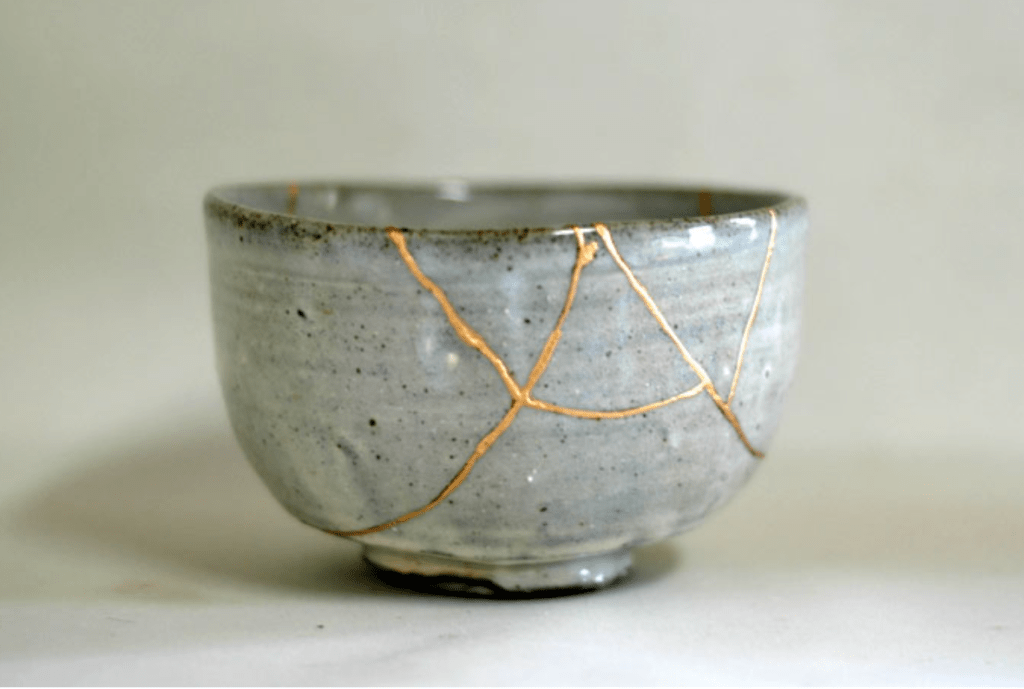
How hard it is to fall apart, to break, to allow emotions to run through like water.
Scary to let go.
Moving through life as a runner.
In hindsight, a wonder: disconnected.
Discarding life over and over.
Kintsugi is “golden joinery.”
What is broken can be repaired, the beautiful history undisguised.
Accepted. Honored. True.
Surrender to impermanence, and gather the pieces.
Hold them all lovingly, sweet anger and sorrow and joy to the breast.
Paint the lacquer of love across the cracks, grace dusted in with the gold.
Humbled by our fallibility.
The whole together again, for now.
And release.
30 days of self-love: spring
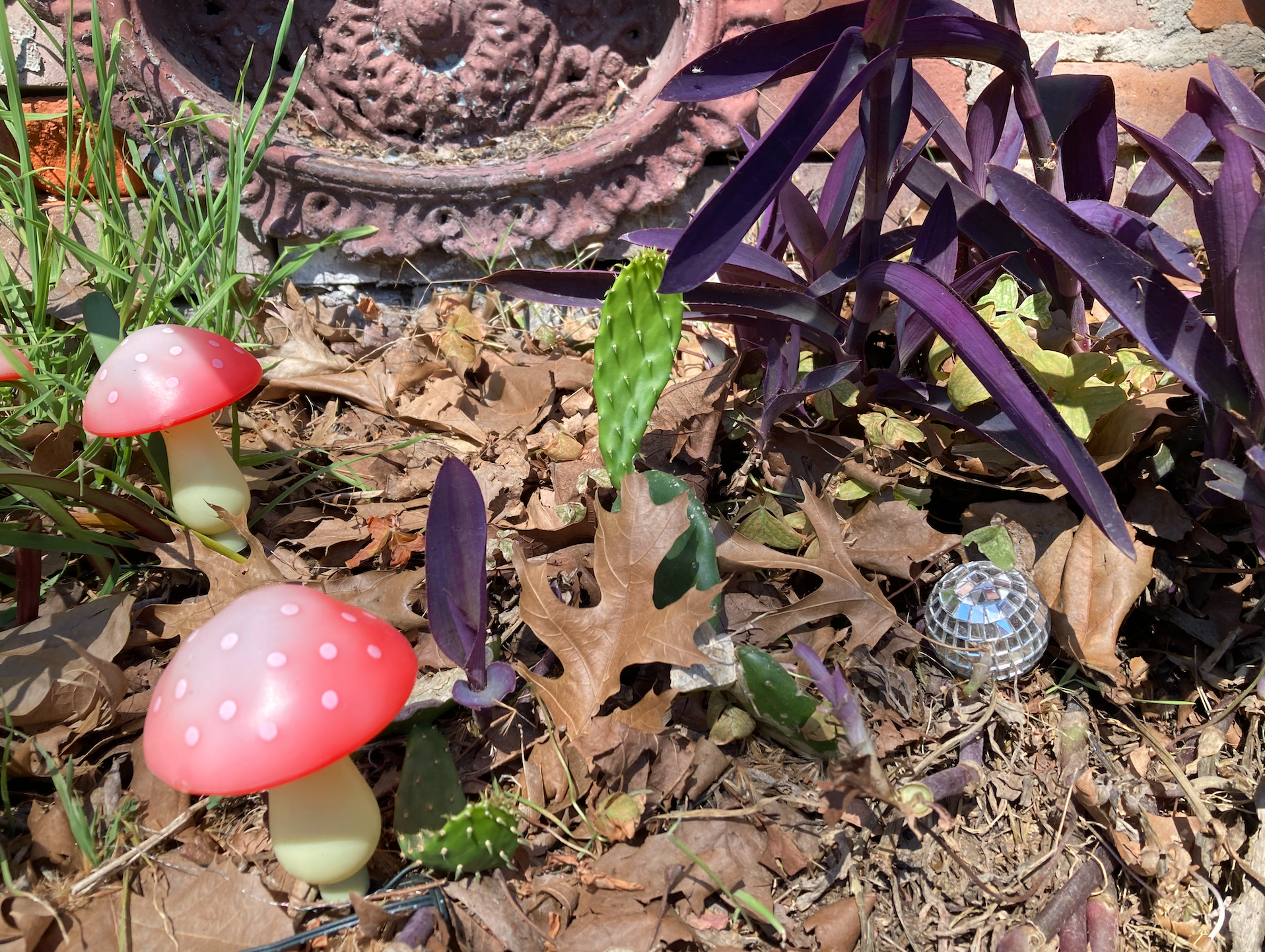
I’ve started so many posts to be this second-to-last one of this 30 days series. Metta, music, massages, self-touch, sleep, dance, community, exercise, vagus nerve, planting. Everything can be self-love when it’s your orientation and I can write for the rest of my life about it and still not be done.
What speaks to me tonight is dirt. The smell of dirt, the feel of my fingers in it, wet, fucund earth being pushed under my fingernails. It gives me blisters and dirty fingertips that are hard to get clean, but I dig with my hands anyway.
Lately, I have been causing myself suffering by allowing stories to take control of my experience. This happens a lot when I struggle to sleep through the night and lose a lot of my capacity to self-regulate. I see myself start to reach out for my security blankets: validation, attachment. My awareness of it can feel awful if I’m not gentle to myself. Friendly to these old friends.
The medicine is spring. It’s dirt. It’s being able to leave the door open and smell the world as it’s waking back up. Spring is change. And even when I try to shape change by what I nurture, I am still surprised every day by what grows without my help at all. What I thought was dead was dormant. What I tried to rescue was dead. Even intention doesn’t always bring a plant back to life. I can recognize my behavior with these plants, my paradoxical behavior of both giving up too easily and having trouble letting go. How can I be still be so good at both of these things?
There’s so little I know. The older I get, the more questions I have. So many more questions than answers. I do know this, That putting my hands and my knees in dirt heals me. There’s purpose there, deep beyond language, and a rightness. A certainty that I’m exactly where I need to be, who I need to be, just the right person to be planting this seed, pulling this weed. I know myself there, when I can touch that. And it can bring food, flowers, beauty, clean air into the world? What a miracle, to play with, to learn from.
I’m not a patient person. I’m trying. I’m trying to learn from the plants. This stuff takes time. Nothing turns out as expected. Not every seed planted will grow. Give it time. Let it surprise you.
30 days of self-love: still mind

A quote comes with my inhale:
“To a mind that is still, the whole universe surrenders.”
City Park on a crowded Saturday,
A quiet corner,
In the afternoon light.
Tourists in Mardi Gras hats and boas,
Their tour guide catches them mid-laugh with their camera.
Still mind, awake body, the cool air breathes on my fingers, through my thin jeans.
In a swamp in a city, birds soaring above and someone yells,
“Don’t get bit by a gator!”
Happy to hear people enjoy our city that the news says to be afraid of.
Laying my head in the lap of a person I love, sun hot on my hood.
The smell of dry grass heating up, children squeal from the playground.
Ibis’ pass overhead, a collective whoosh of murmuration.
Oh, spanish moss moving in the trees with the breeze,
Oh, fading light creating shadows that slowly slide down the trees,
Oh, breath that keeps me here,
In this moment.
30 days of self-love: tiny perfect things

Children are wise. I think that’s one reason why it’s so hard (for me, at least) to write a children’s book. You have an audience known for a short attention span, and a keen sense of when a story is worth listening to.
That’s why I love a really well-written children’s book. It distills a story to its most compelling elements.
I was given the book pictured above as a gift, and I like to keep it displayed to remind me how the most foundational of spiritual themes can be found in a children’s story: awe, presence, excitement, appreciation of the mundane, finding beauty in the ordinary. I pick it up and read it sometimes for inspiration before a walk, or when I need a good reminder of how I am always surrounded by some magic to noticed.
In Tiny, Perfect Things, the little girl and her grandfather go for a walk around their neighborhood. Every step reveals another wonder to be discovered: a leaf, a spiderweb, a crow, a red bottle cap, a cat.

She says,
“The world is full of wonders,
no matter where we go.
Can we go again tomorrow?
I wonder what we’ll see.”
The Dalai Lama says,
“Be kind whenever possible.
It’s always possible.”
I can’t be sure, but I think he might say the same about the world.
An excitement for your life, rooted in a joy of what’s around you, whenever possible.
It’s always possible.
How many tiny, perfect things can you find?
30 days of self-love: laughter

They say laughter is the best medicine. Science agrees, and so do I. Though at times I’ve stayed too long in irony, humor has served me well in my life, getting me through some of my most challenging, most devastating experiences.
Why laugh? Reasons number in the many. Reduced stress hormones, increased anti-body cell production, a top-body workout (even for the heart!), increased endorphins, increasing the joy around you (laughing in community, it’s contagious), a RELEASE! It feels good to laugh.
The Dali Lama said in the delightful film with him and longtime friend Archbishop Desmond Tutu, that we should not ask how can I be happy but how can I spread compassion and love? Of course, spreading compassion and love brings us joy, and with that, laughter. To me there aren’t many quicker ways to joy than laughing. Just try it. Listen to the below and see if you don’t at least feel the beginnings of a smile.

How to learn to laugh? Start with yourself, said the Archbishop.
“I don’t think I woke up and presto, I was funny,” the Archbishop added. “I think it is something that you can cultivate. Like anything else, it is a skill. Yes, it does help if you have the inclination, and especially if you can laugh at yourself, so learn to laugh at yourself. It’s really the easiest place to begin. It’s about humility. Laugh at yourself and don’t be so pompous and serious. If you start looking for the humor in life, you will find it. You will stop asking, Why me? and start recognizing that life happens to all of us. It makes everything easier, including your ability to accept others and accept all that life will bring.”
I think of times when I’ve felt like I truly have a right to my anger – oh, it’s important to feel our feelings. But for me, feelings can also wash me away into a place I can’t find my footing for a pause. Especially big feelings in me like anger, or sadness. I’m doing my best now to drop that hot coal once I’ve felt it burning and reach for something else: a laugh, a full-body shake, a twirl, a scream, a sitting with it. It’s hard for me to choose to do it sometimes, really hard, and I’ve learned it’s easier when we’re laughing.
Here’s something to try. Next time you’re feeling angry, I suggest looking at yourself in the mirror. I tried this and couldn’t help but laugh at my scrunched up face. Every time we laugh, I think we carve out a little more space in ourselves for love and compassion and joy, make it just a minuscule easier to grab for it again.
Laughter has transformed my relationships. I know it can change the world. If the Dalai Lama and “Arch” learned to laugh at themselves, surely we can too.

Though there’s an array of research on laughter, one thing seems clear, and that is that we can benefit greatly from laughing more, and we laugh most when we’re with others. I want to laugh with all of you 400 times a day. I want to be silly and spinning and dancing like dinosaur for no reason at all. I want to cultivate my skill set of finding the ridiculous that Arch said was in all of us, in the best and worst of circumstances.
Watching Mission: Joy, Finding Happiness in Troubled Times left me feeling light and inspired to remember that if we keep practicing, we can learn to reach for humor and each other.
 look up